The Notch blog
How small software teams and agencies track issues and hours: guides, comparisons and what we learned building Notch.
-
 Nov 23, 2026
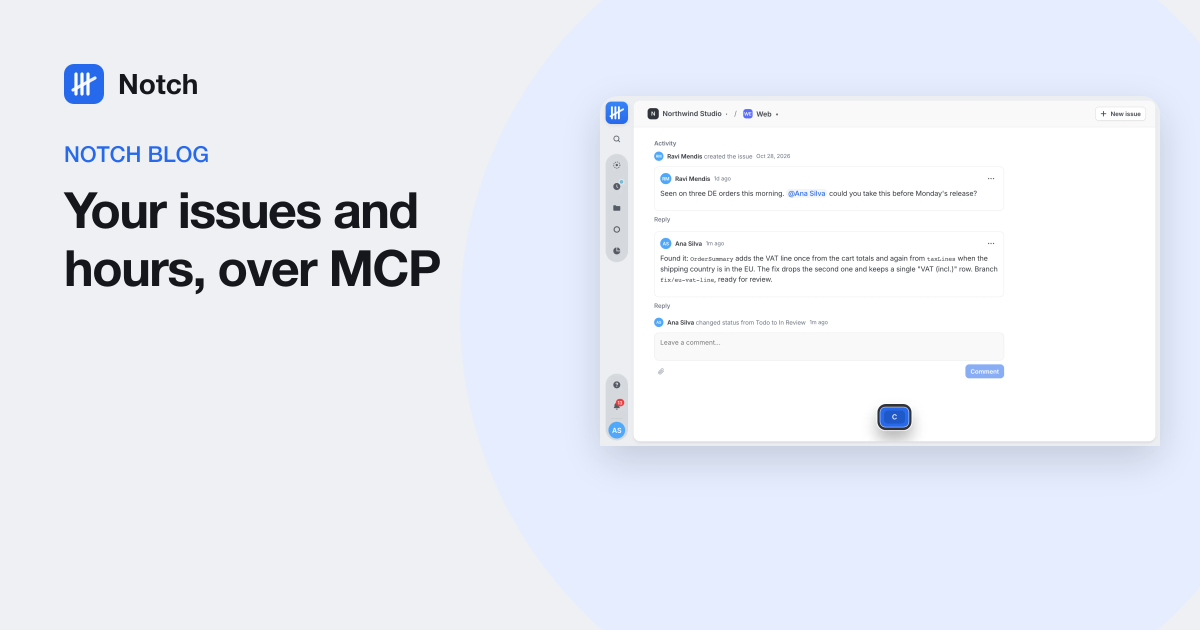
Notch now has an MCP server: your issues and hours, from the tools you already code in
The Notch MCP server lets Claude, Claude Code, Cursor or any MCP client read and update your issues, comments, cycles and hours, signed in as you.
-
 Nov 15, 2026
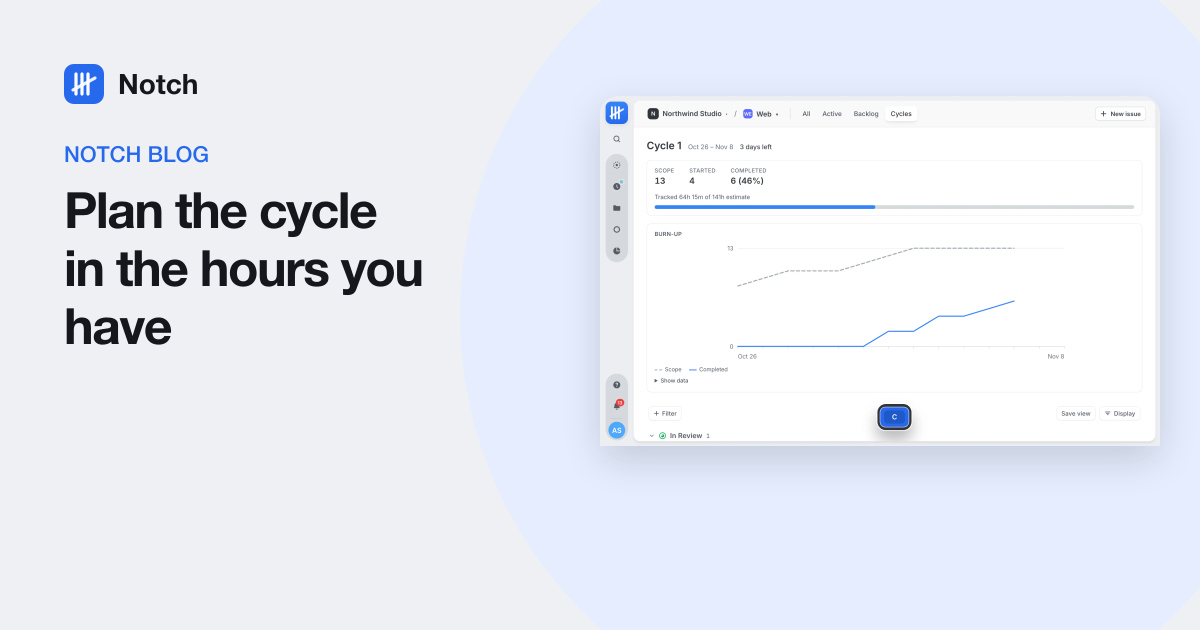
Sprint capacity planning in hours: a 5-step method with a worked example
Sprint capacity planning in hours, in 5 steps: count available hours, subtract non-project time, commit against estimates, track, and review carry-over.
-
 Nov 15, 2026
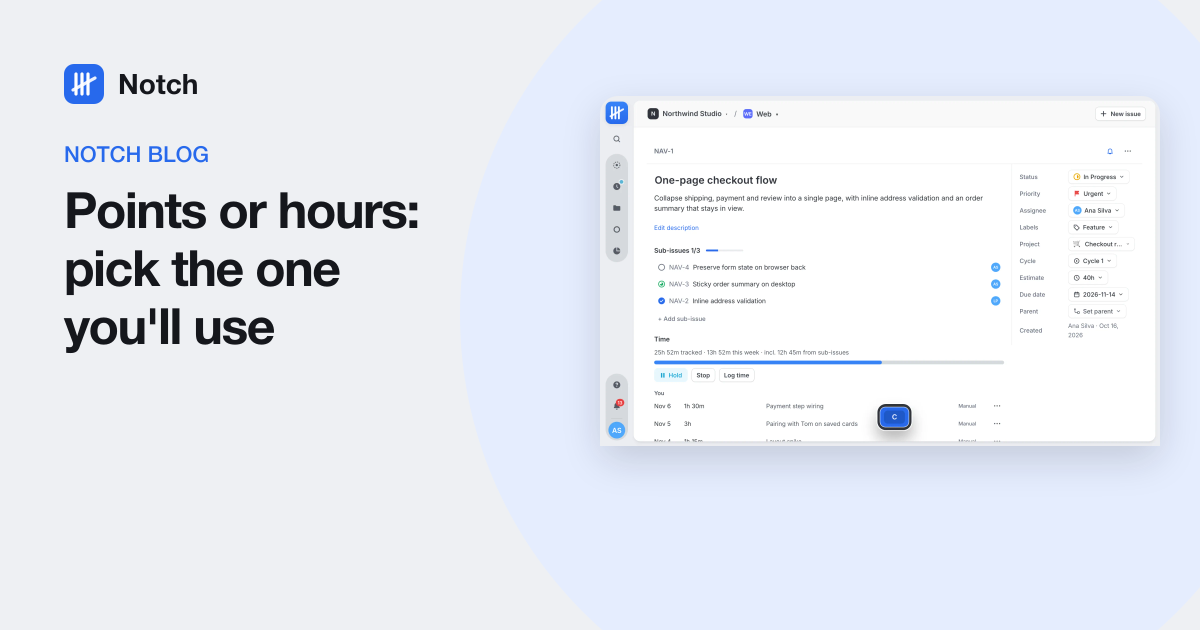
Story points vs hours: the honest case for each, and when to estimate in hours
Story points vs hours, from the primary sources: what each estimate is good for, when hours win (client work, small tasks), and how teams use both.
-
 Nov 7, 2026
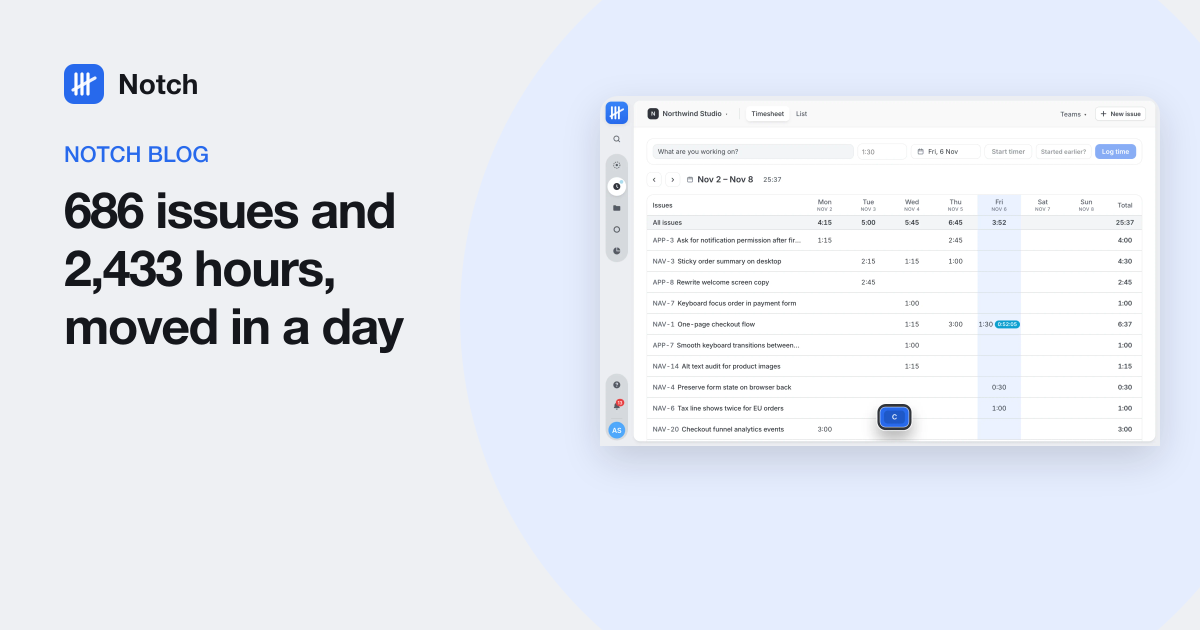
We replaced Linear and Everhour with one tool: 686 issues and 2,433 hours, moved in a day
Replacing Linear and Everhour with one tool: how our agency moved 686 issues and 2,433 hours in a day, what we checked first, and what we'd change.
-
 Nov 7, 2026
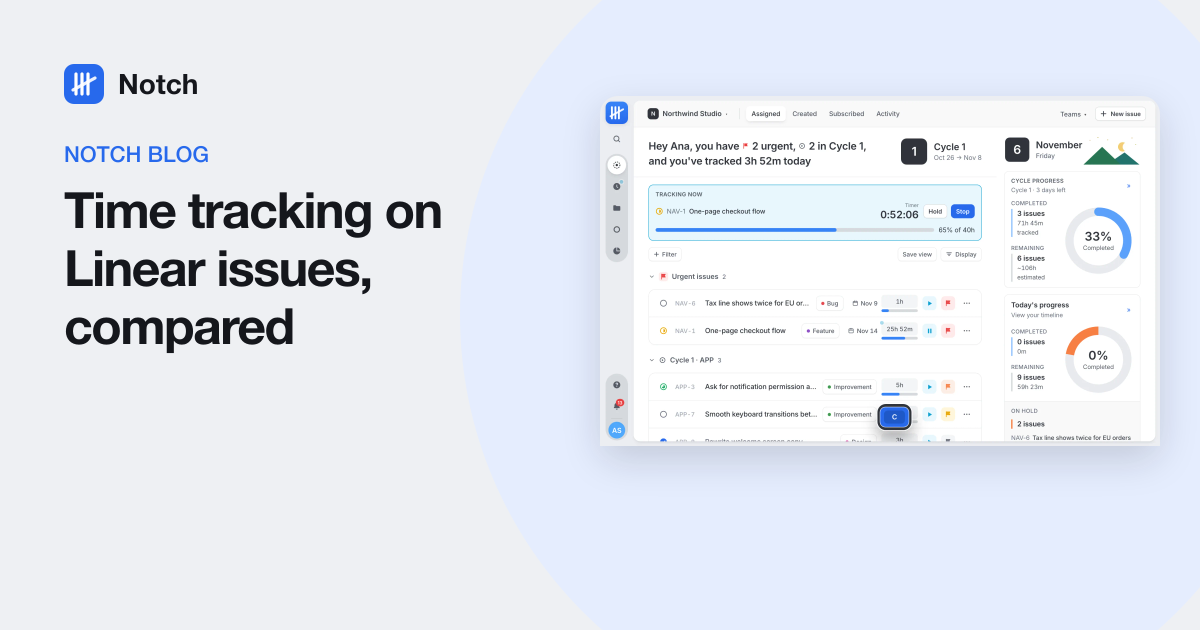
How to track time on Linear issues: every option compared
Linear has no built-in time tracking. The 5 ways teams add it, from Everhour and Harvest to a spreadsheet or a tracker with time built in, compared.
-
 Nov 7, 2026
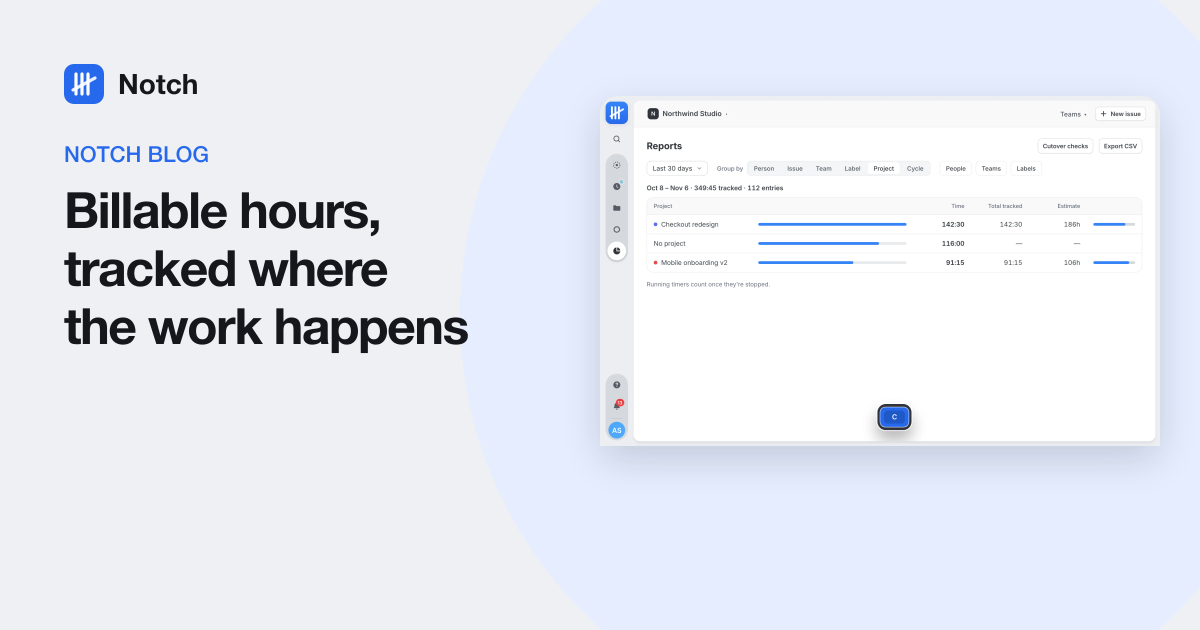
How software agencies track billable hours against their work
A billable hours system for small dev agencies: track time on the issue, estimate in hours, review weekly, and report to clients from the same place.